
Restaurant Digital Marketing Strategies: Introduction Guide for Beginners
Running a successful traditional dining establishment has always relied on serving exceptional food and offering warm hospitality. For years, a great plate of food and strong word-of-mouth recommendations were more than enough to keep tables full. However, the modern marketplace has changed drastically. Today, local diners rely heavily on their smartphones to decide where they will eat lunch, host family gatherings, or order takeout.
If your online presence is invisible, you are losing out on a massive group of potential guests who do not even know your business exists. Building basic awareness about restaurant digital marketing strategies is no longer optional; it is a fundamental requirement to stay competitive. This introductory guide will break down the essential types of digital marketing in simple, everyday terms so you can confidently start attracting more local diners to your tables.
1. Local SEO: Making Your Kitchen Visible on Google Maps
When hungry customers search online for "authentic Nepali food near me" or "best Thakali thali in town," Google displays a map showing three local business options. This highly visible area is called the Google Map Pack. Appearing in this section is the most powerful result of implementing basic restaurant digital marketing strategies, because it captures local customers right at the exact moment they are ready to buy food.
Clear Your Secondary Storefront: Google Business Profile
To show up on that map, you must claim and set up your Google Business Profile (GBP). This acts as a digital version of your physical storefront. You need to fill out your operational hours accurately, list your physical address, and provide an active phone number. If your operational hours are wrong online, a customer might show up to a locked door, which instantly ruins their trust in your brand.
Upload Real Pictures Regularly
Search engines reward active profiles. You should regularly upload clear photos of your dining space, your staff, and your dishes. When a local family sees an inviting atmosphere online, they feel much more comfortable booking a table for a special occasion.
2. Dynamic Menu Design: Your Online Salesperson
Your online layout is often the very first thing a customer looks at before deciding to visit. A strategic, modern menu design is not just a list of items and prices; it is a visual framework carefully built to showcase your kitchen's strengths. When users browse your website or digital profiles, your layout needs to convince them to order.
Highlight Premium Offerings
When designing digital interfaces, people naturally skim screens in specific patterns, usually starting near the top left and center. An effective digital menu design takes advantage of this by placing your highest-margin items, family sets, or iconic signature platters in these high-visibility areas. Use bold headings or distinct spacing to make these items catch a user's eye instantly.
Avoid Using Clunky PDF Links
Many traditional owners make the mistake of uploading their physical menu as a massive PDF file or a blurry smartphone photo. This forces a user to awkwardly pinch and zoom on their mobile phone just to see the prices. A mobile-optimized digital layout should use clean, responsive text that loads instantly on any screen size.
3. Social Media Marketing: Building an Active Community
Social media is the visual heart of modern food advertising. Platforms like Facebook and Instagram allow you to tell the story behind your kitchen, making your food look incredibly appealing to people scrolling through their news feeds.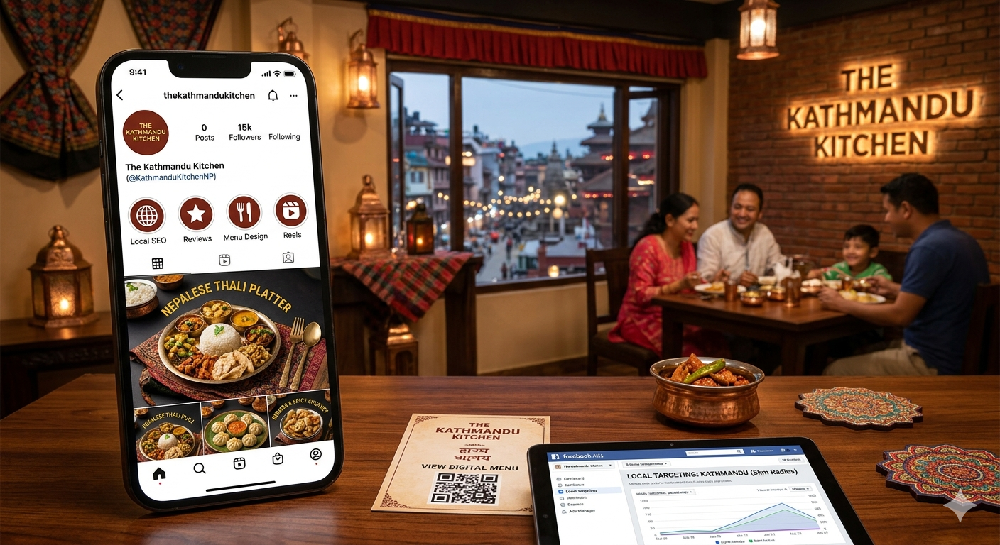
Capture the Power of Short-Form Video
Diners connect deeply with visual storytelling. Short, 15-second videos showing the steam rising off a fresh plate of momos, or a quick behind-the-scenes look at a chef preparing a traditional curry, generate immense engagement. You do not need expensive gear; authentic videos filmed directly on a clean smartphone under natural lighting work perfectly to build excitement.
Engage with Local Followers
Social media is a two-way street. When users leave comments or ask questions about your weekend specials, respond promptly and politely. Building an active community online turns casual internet browsers into passionate real-life patrons.
4. Reputation Management: Navigating Customer Reviews
An optimized map listing gets your business noticed, but your online reputation is what ultimately convinces a family to choose your dining room over a competitor down the street. Modern diners read reviews to verify that a business is clean, friendly, and consistent.
Encourage Consistent Feedback
Having positive reviews from a year ago is helpful, but search engines and customers prefer recent feedback. To build a steady flow of new reviews, place small, custom QR code stickers on your table tents or bill presenters. This allows satisfied guests to quickly scan the code with their phones and leave a rating before they walk out the door.
Respond to Feedback Professionally
Managing an online reputation means interacting with every single piece of feedback.
-
When handling positive comments: Express your gratitude and mention specific dishes they enjoyed to show you appreciate their visit.
-
When handling negative comments: Always remain professional and calm. Apologize for any mistakes, state your high standards clearly, and offer a direct email or phone number to resolve the issue privately. Prospective customers read negative responses to see how professionally a business handles problems.
5. Website Optimization and Event Bookings
All your local search and social media efforts should guide interested users back to your main website. Once a local user lands on your site, the experience needs to be effortless. Your website must be fast, mobile-friendly, and feature distinct buttons at the top of the page for "Book a Table" or "View Menu." To learn more about auditing your digital performance, explore our detailed resource on [Internal Link: tools recommended for comprehensive website SEO audits].
Target the Lucrative Event Market
While casual daily diners keep your kitchen moving, large group bookings and private parties provide the highest profit margins. If your venue has a spacious layout or a private function space, highlight this online. Create a dedicated section on your website showcasing your seating capacity and group catering packages. Marketing your space for corporate dinners or family milestone celebrations is an excellent way to secure predictable revenue.
Conclusion: Take Action for Creative Growth
Stepping into the digital world can feel overwhelming at first, but mastering basic restaurant digital marketing strategies is the single most effective way to protect and grow your traditional business. By taking control of your Google Map listing, simplifying your online menu design, interacting with customer reviews, and keeping your social media active, you build a reliable system that consistently brings local diners through your doors.


Leave your comment